Brivity.
VP of Product after Brivity acquired Blueroof360, the company I co-founded. Two tech stacks merged into one platform, a 70%-market-share competitor to outmaneuver, and three different executive hats worn at once until the org could afford specialists. $5M to $50M+ in SaaS ARR over three years.
// The situation
Two tech stacks. One platform. A 70%-market-share competitor across the table.
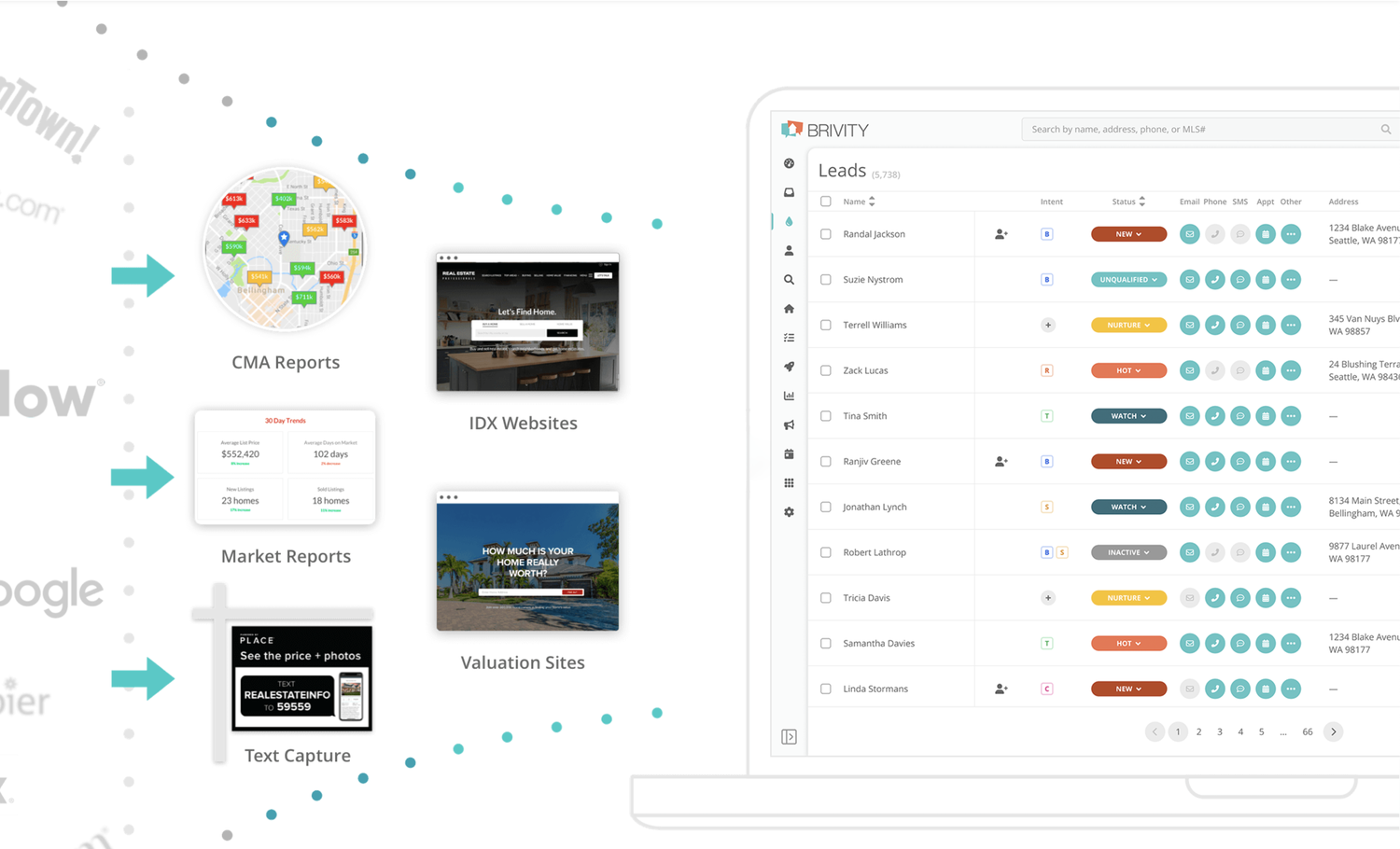
In 2017, Brivity acquired Blueroof360, the agent-website company I had co-founded in 2008. The acquisition put two products under one roof: Brivity's CRM and Blueroof's websites. Both were strong individually. Neither was complete on its own. Combined, they could be the platform that high-producing real estate teams actually needed.
The catch: one competitor in the agent-CRM space already had roughly 70% of the market. We weren't going to win by feature parity. They had years of head start, a bigger team, and customer references on every block. The bet was on a different axis: focus on the few features that actually mattered to high-producing teams, and back the product with a guarantee the incumbent couldn't credibly make.
// The team
VP of Product, CTO, VP of Sales. Yes, at the same time.
For the first stretch, I held three executive roles simultaneously: VP of Product, CTO, and VP of Sales. Not by design, by necessity. Brivity was a small company doing big things, and we couldn't afford to hire specialists for each function until the revenue caught up.
The practical effect: every employee did a little of everything. Designers wrote bug tickets. Engineers walked customers through onboarding. Sales reps relayed customer feedback into the next sprint. It was the kind of cross-functional intimacy you only get at small scale, and a lot of what I learned about how product, engineering, and go-to-market should actually work together came from those three years of doing all three at once.
As the company grew, I recruited and developed the senior leaders who eventually took those individual seats, including the CTO who took over engineering.
// The bet
Don't compete on features. Compete on focus.
Focus over feature parity. The incumbent had hundreds of features. We were never going to ship "all of them, slightly worse." The bet was to identify the five or six workflows that high-producing real estate teams actually relied on daily, and build those better than anyone else.
Guarantee the outcome, not the contract. While competitors locked customers into multi-year contracts, we offered Brivity month-to-month. The slogan was "we guarantee success." If the product didn't work for the team, they could leave. That commitment forced the product team to obsess over actual workflow impact, not just the demo.
Build the onboarding machine. Customers who couldn't get set up fast would never see the value. We invested early in repeatable onboarding processes, structured implementation, and customer-success rituals that turned new signups into power users in days, not months.
// The product portfolio
The Brivity Platform.
The Brivity Platform brought CRM, websites, and listing management into one ecosystem built for high-producing real estate teams. The four products at the heart of it:
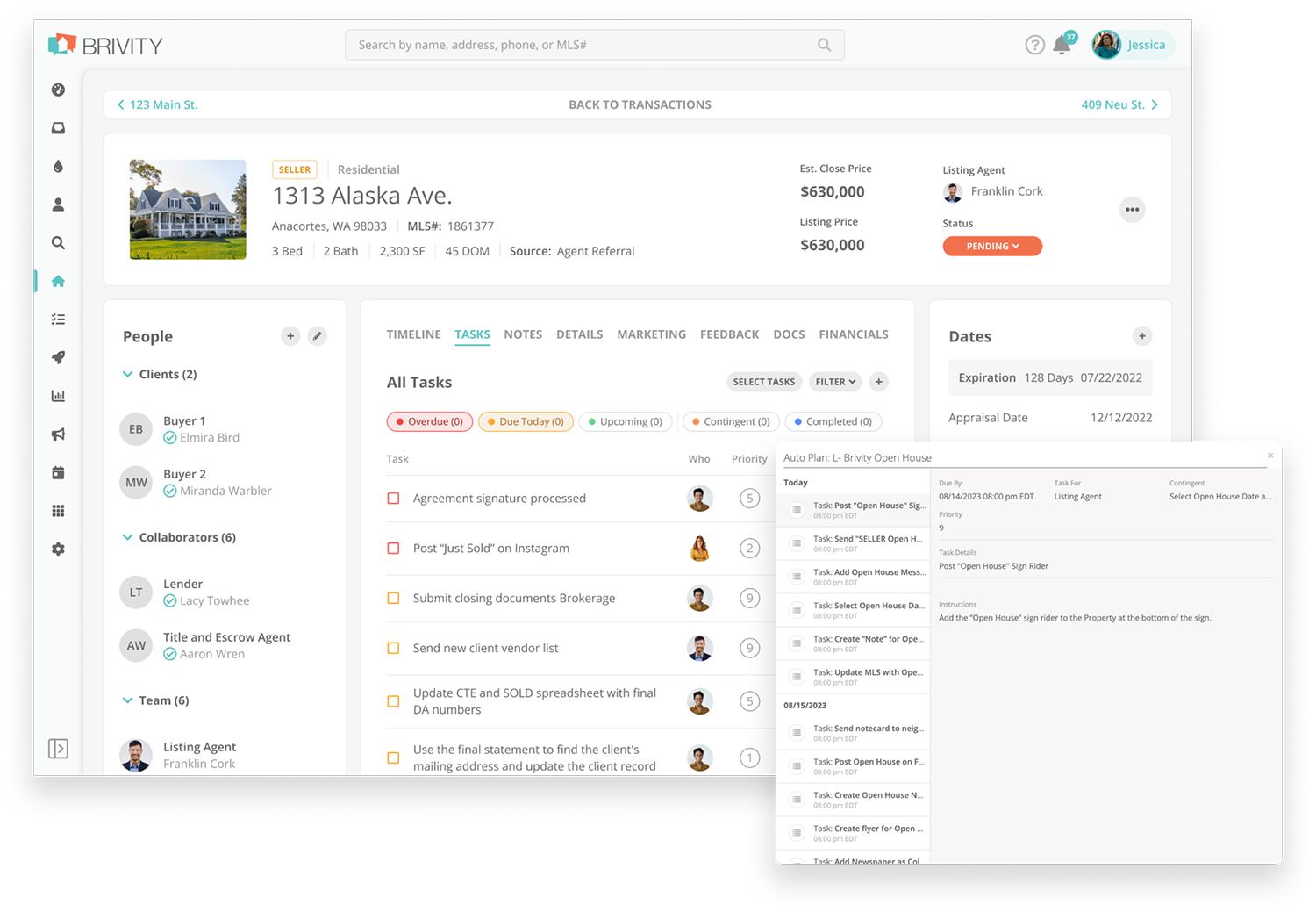
Brivity CRM.
The core product. Lead tracking, transaction management, automated follow-ups, communication tools, and team performance dashboards. Built for the kind of teams that run 50 to 500 deals a year, not for solo agents managing a couple a month. The CRM was the operating system for the team's business.
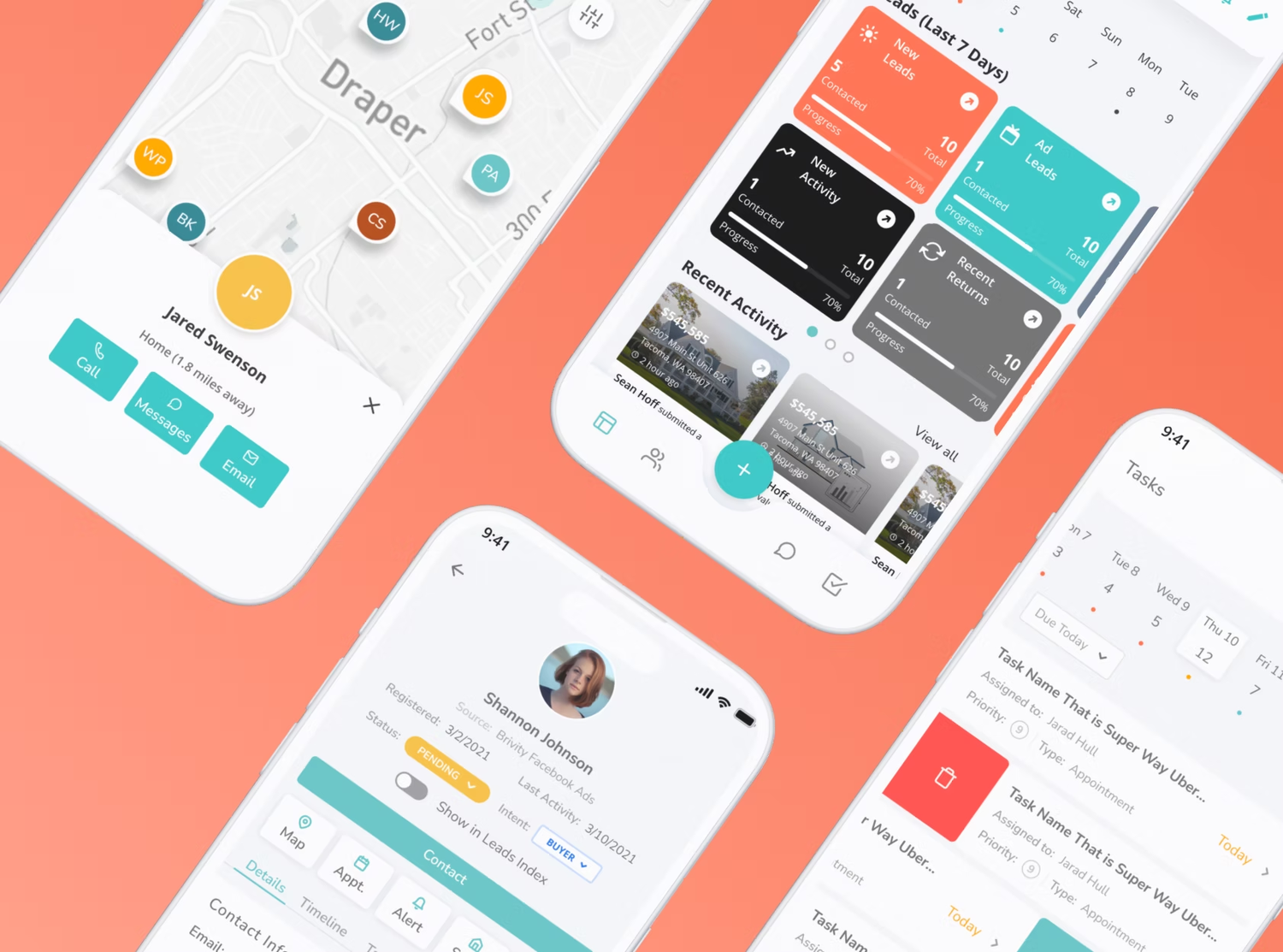
Brivity Mobile CRM.
The mobile companion. Real estate happens in cars, at open houses, and between showings, not at desks. The Mobile CRM gave agents lead management, property details, deal tracking, and integrated text, chat, and email from their phones. Push notifications meant agents responded to leads in minutes while competitors required logging into a desktop.
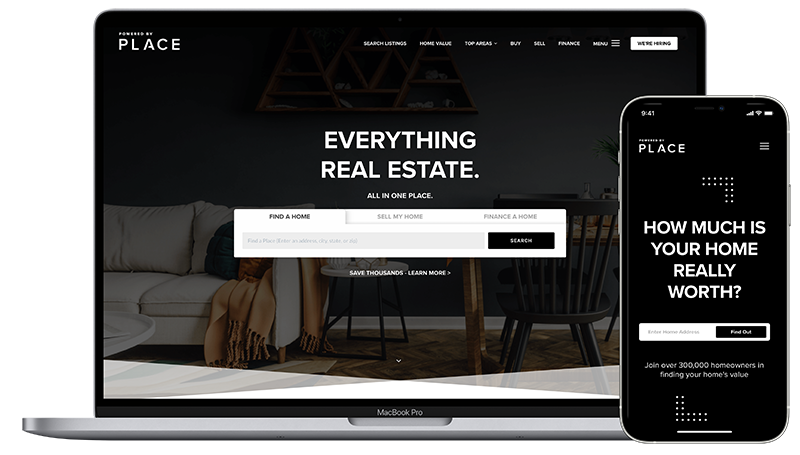
Custom Websites.
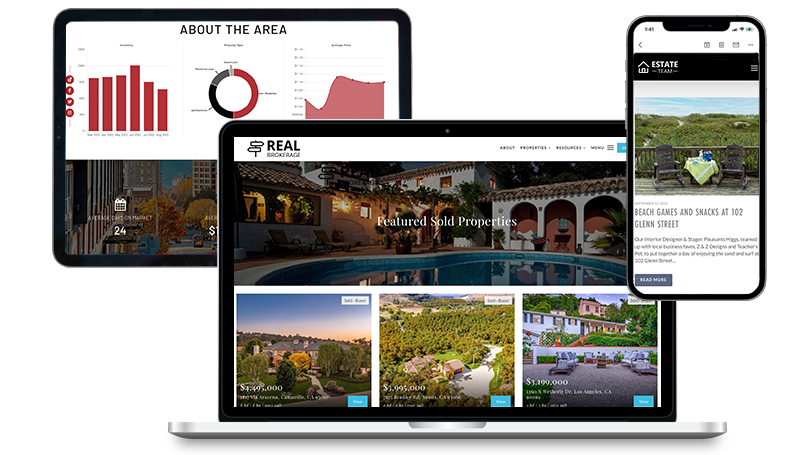
From the Blueroof360 acquisition. Each site customizable to the brokerage or team, with IDX search built in (refreshed every 5 minutes), branded agent rosters, and SEO optimization. The websites were the lead-generation engine; the CRM was where those leads went to be worked.
Property Landing Pages & Listing Management.
Every active listing could be turned into a custom landing page with photos, video, marketing copy, and integrated lead capture. Agents could update property info, add higher-quality media, and run targeted campaigns to drive traffic to specific properties. The drag-and-drop builder meant agents didn't need a designer to publish a listing page that actually looked good.
// What it produced
Ten times the revenue. One exit. A platform that took on the market leader and won real customers.
- $5M → $50M+
- SaaS ARR growth (10x).
- 3 years
- From acquisition to exit.
- 70%
- Competitor market share to outmaneuver.
- 2
- Tech stacks merged into one platform.
- 3
- Executive roles held at once in the early phase.
- Month-to-month
- Contracts in a market locked into multi-year.
- Acquired by Place
- The exit, 2020.
// What it proves
Best CPO training I ever got: being forced to do every other executive's job at the same time.
What I learned at Brivity: the gap between a product team and a sales team and an engineering team is mostly fictional. They're all working on the same problem, which is making customers successful enough that they keep paying.
When you're VP of Product, CTO, and VP of Sales at the same time, you can't pretend any of those functions are someone else's. Every sales objection becomes a roadmap item. Every customer-success ticket becomes a product flaw. Every engineering trade-off becomes a sales positioning question. The artificial walls fall away because there's no one else to throw the work over to.
I've carried that into every CPO seat since: the product strategy is the customer-success strategy is the engineering strategy is the sales strategy. Different vocabulary, same problem.
// Keep going