Travelpass.
Six months from arrival to launching a new consumer travel community, while retrofitting AI into the core hotel-booking funnel that runs $120M+ in annual revenue.
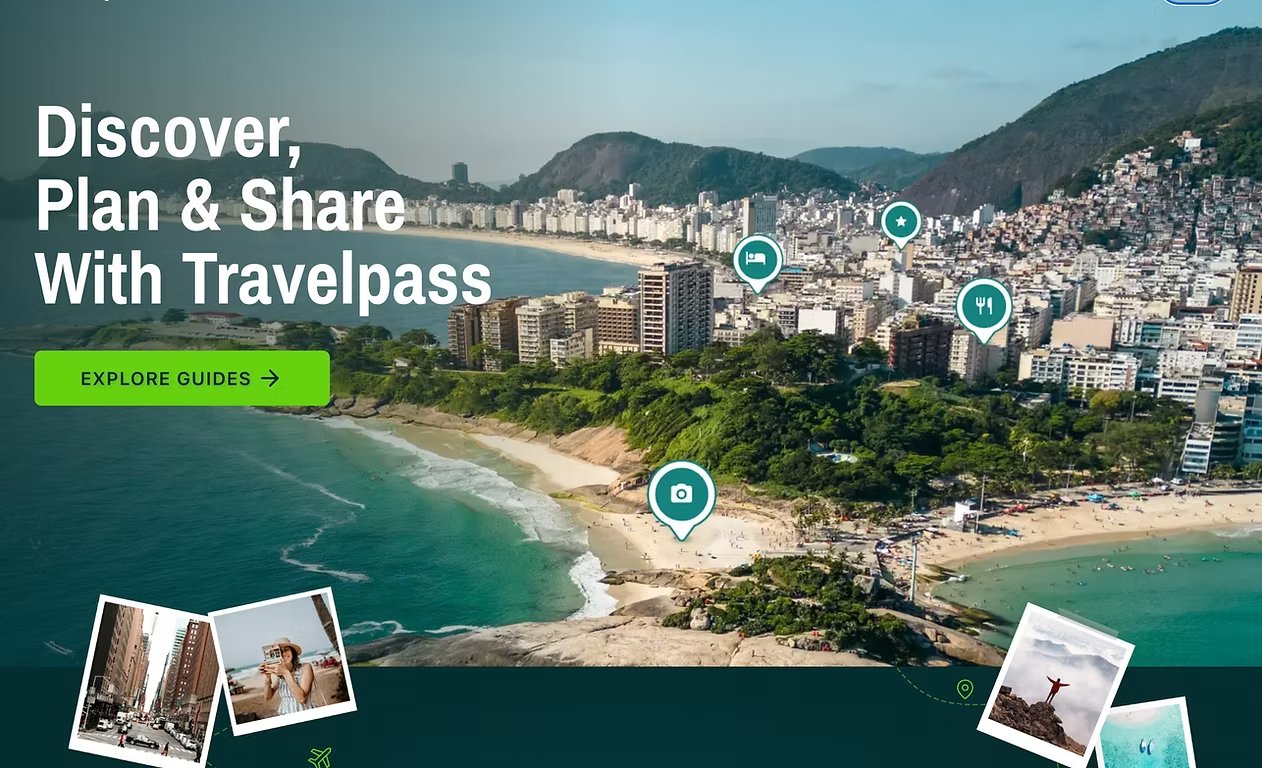
// The situation
Define the product. Then ship it. In that order, in six months.
When I joined Travelpass, the team was working on the company's biggest bet to date: a new consumer travel platform meant to take Travelpass beyond its core hotel-booking business. The hard part was that no one had pinned down what we were actually building yet.
The clock was six months. Travelpass had a Utah Jazz sponsorship going live at the Delta Center, and the product had to be public and demoable by then. Before any of that could happen, the team needed a problem statement it could agree on.
The question we landed on was simple to say and hard to answer well: how do travelers plan a trip, get inspired for the next one, book what they need, and share what they did with the people in their life? Four pieces of a workflow that the industry had unbundled into a dozen separate apps. We were going to put them back together.
// The team
Seventy-five people, in motion. Not necessarily in formation.
Seventy-five people across product, design, and engineering were already in motion on the consumer platform when I arrived. The team was talented but stalled. With a six-month deadline closing in and no shared problem statement, the gap between intent and execution had to close fast.
The first weeks were diagnostic. I let some people go and hired new ones, mostly at the leadership layer where misalignment had been widest. The cultural shift was simple to name and hard to enforce: we ship things, and we measure them.
// The bet
Build the new flagship. Make the old business smarter. Same six months.
Travelpass was a hotel-booking business. Search-engine marketing in, call-center bookings out, with 60% of revenue closing on the phone. Real money, real product, but no real consumer brand. The company's bet was to add a second product stream: a consumer travel community that would let Travelpass earn a direct relationship with travelers instead of buying them on Google every time.
I made two calls. First, the new community had to ship by the Delta Center sponsorship date — no quarter on the deadline, scope adjusted as needed. Second, the AI everyone was excited to apply on the consumer side belonged in the core business too. The hotel SEM funnel was where the cash already was. If AI could make it better, the impact would dwarf anything we shipped on the community side in year one.
// The community
Travelpass.com.
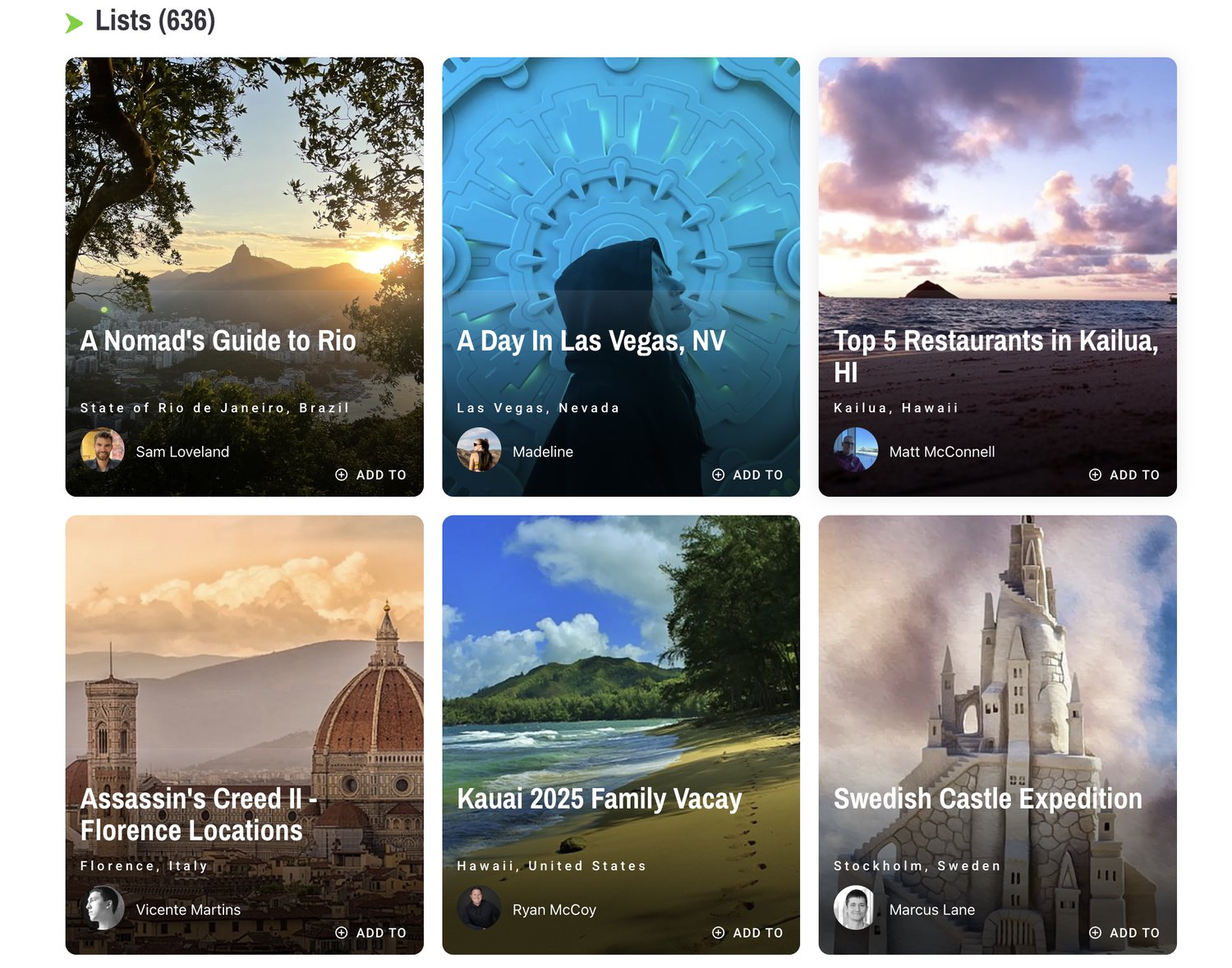
A consumer travel community where people uploaded the itineraries from their actual trips, shared them publicly, discovered itineraries from other travelers, followed people whose taste lined up with theirs, and used a planning tool to assemble their own.
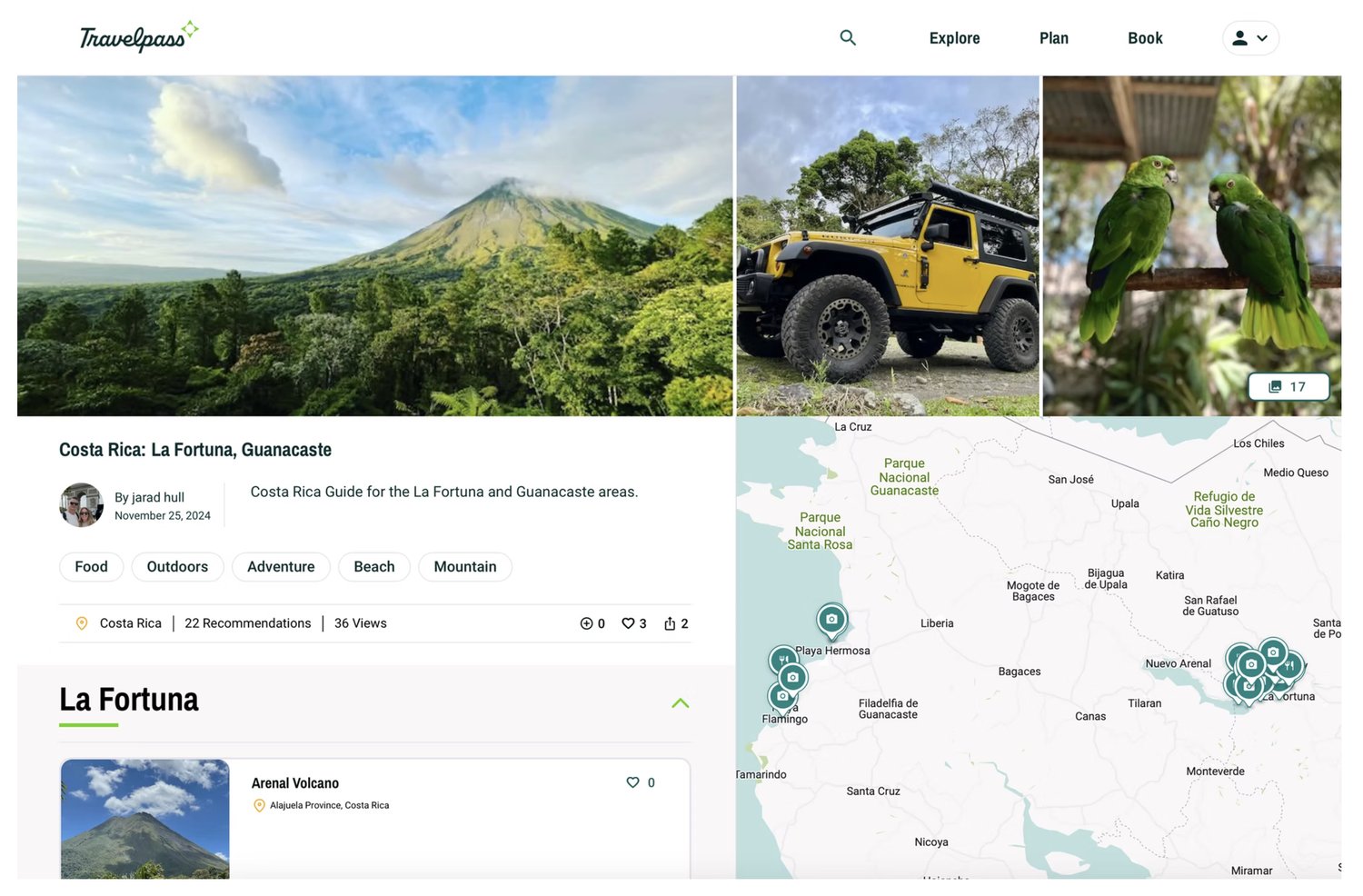
The traveler profile.
The AI layer underneath built a complete profile for each traveler, derived from where they'd traveled, the restaurants they'd visited, the hotels they'd stayed at, who they followed, and the content they engaged with. The intent was to license that profile data downstream to OTAs like Expedia and Priceline, who would use it to power dramatically better personalization in their own checkout flows. Travelpass would own the consumer relationship and rent the resulting intelligence to the rest of the travel ecosystem.
Bribery, basically.
The launch hook was a contest. Travelpass gave away a $20,000 vacation. Anyone could register, build an itinerary, and submit it to a public vote. The community picked the winner. The platform had over 50,000 registrations, more than 20,000 itineraries, and a 40% return rate — the kind of repeat engagement that signals you've found something travelers actually want to come back to.
// The revenue engine
AI in the core hotel-booking business.
The community was the flagship the company wanted. The hotel-booking funnel was where the cash already moved. We rebuilt it as an AI-driven system end to end.
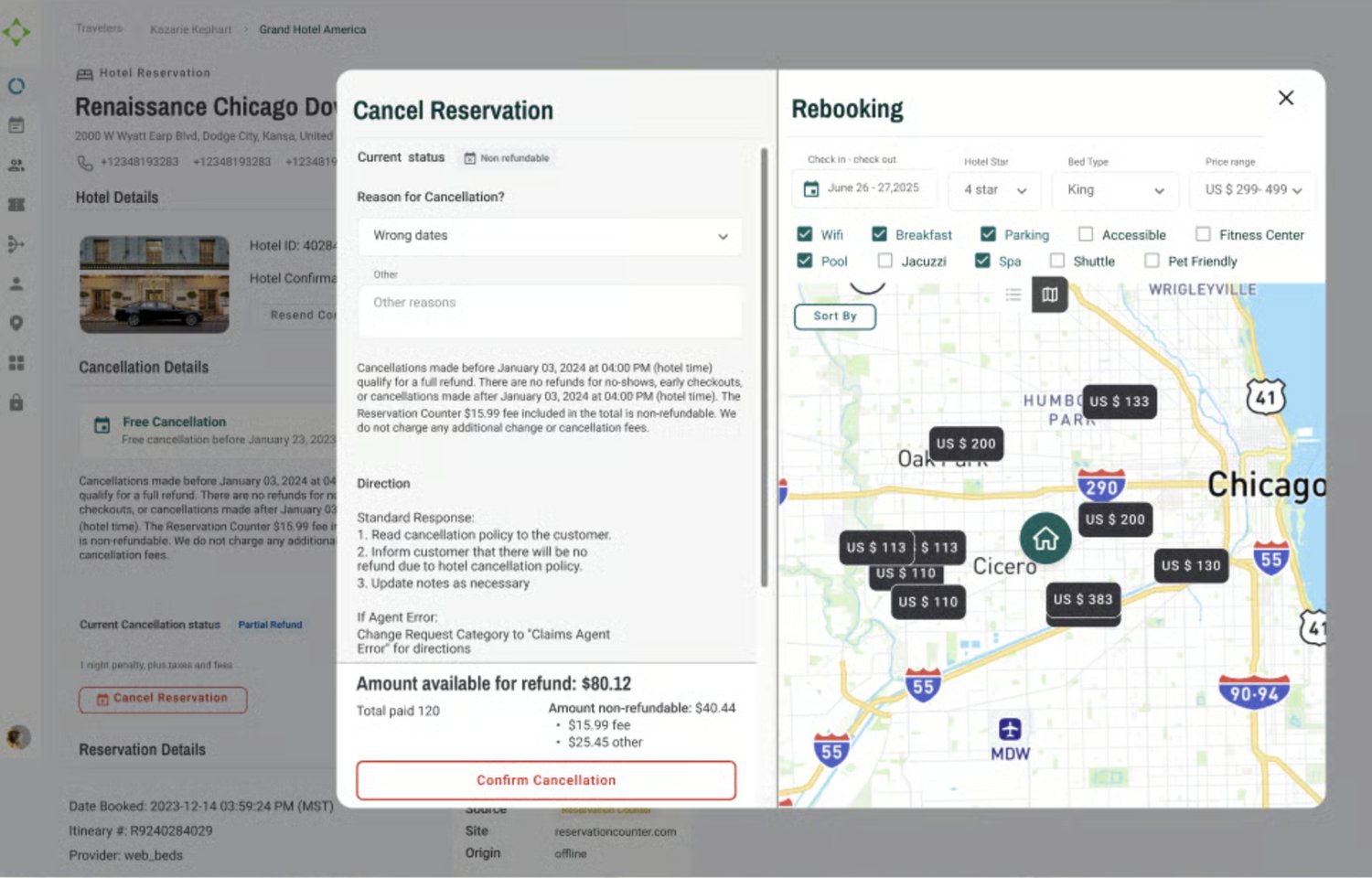
SEM, set and optimized by AI.
The hotel-booking business ran at roughly 7,000 bookings per day, the majority closing through a call center fed by inbound calls from SEM-driven search traffic. The SEM strategy had been managed by hand: humans setting bids, choosing keywords, and adjusting campaigns based on last week's reports. We replaced that with AI. The system analyzed historical and current campaign performance, set bidding and targeting strategies, and optimized the funnel for conversion and margin in near-real time. The bookings flowing into the call center weren't just more, they were better qualified.
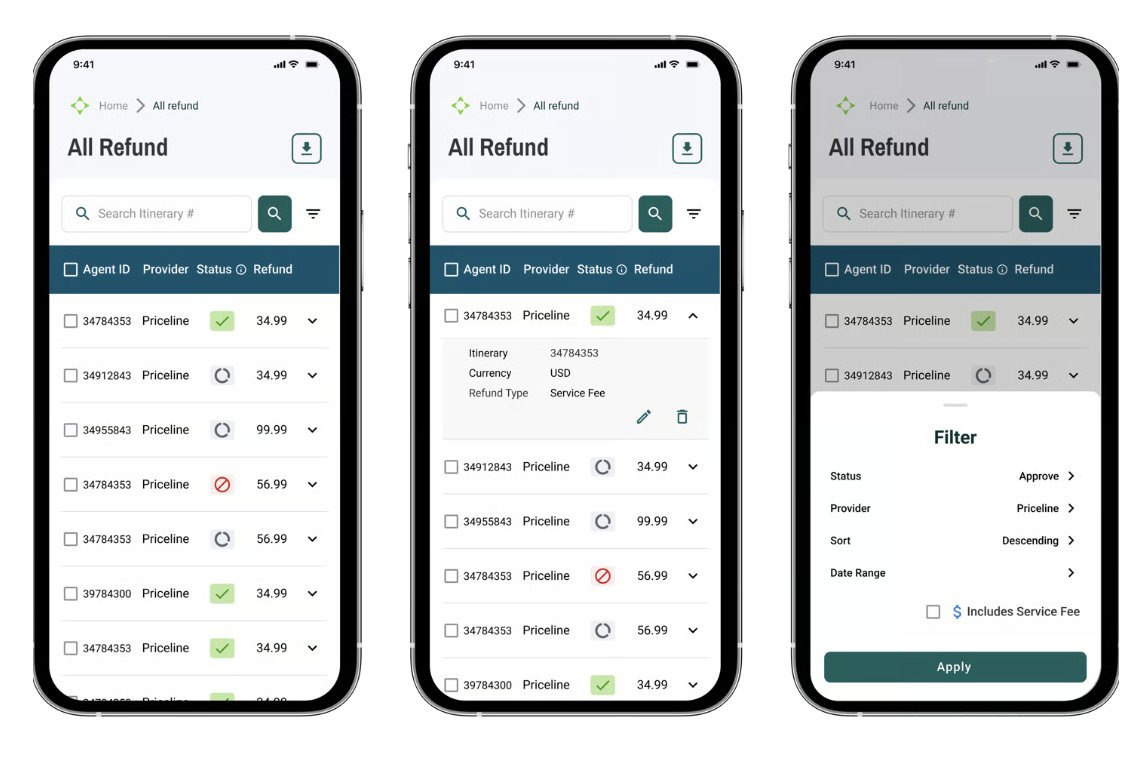
A custom call-center CRM, with AI in the conversation.
The second piece was a CRM we built from scratch for the call center. When an inbound caller hit the line, their search history from Travelpass.com flowed into the CRM. AI surfaced personalized hotel recommendations for the rep to pitch, based on what the caller had been looking at, what matched their stated preferences, and what was likely to convert given the rep's prior call data. The rep stopped guessing.
The result.
The AI-driven SEM funnel and the AI-assisted CRM, working together, ran a hotel-booking business doing over $120M in annual revenue. AI wasn't a feature on the side. It was the core operating system of the company's primary revenue line.
// What it produced
A new consumer flagship and an AI revenue engine. Built the new bus without taking the old one off the road.
- 6 mo.
- Arrival to public launch at the Delta Center.
- 50,000+
- Registrations on Travelpass.com.
- 20,000+
- Traveler itineraries created.
- 40%
- Return rate on the community.
- 7,000 / day
- Hotel bookings on the core SEM business.
- $120M+ / yr
- Annual revenue running through the AI-driven funnel.
// What it proves
Building a new flagship and retrofitting AI into the core revenue engine is the same job, not two.
The discipline that makes either of these possible is identical: name what the team is shipping, close the gap between leadership intent and floor execution, and put AI where the money actually moves. Most CPO seats try to do one of these well. The right ones do both at once, because the operating model that produces a flagship in six months is the same operating model that lets you rebuild the revenue engine while you're doing it.
What I carry forward: AI earns its keep when it runs the system the money already moves through, not when it decorates the new thing. At Travelpass it became the demand and booking engine underneath the whole business. That is the same job I took to Compass, at enterprise scale, and it is the job I want next.
// Keep going